Chandi Devi and Mansa Devi: Legends and Religious Significance
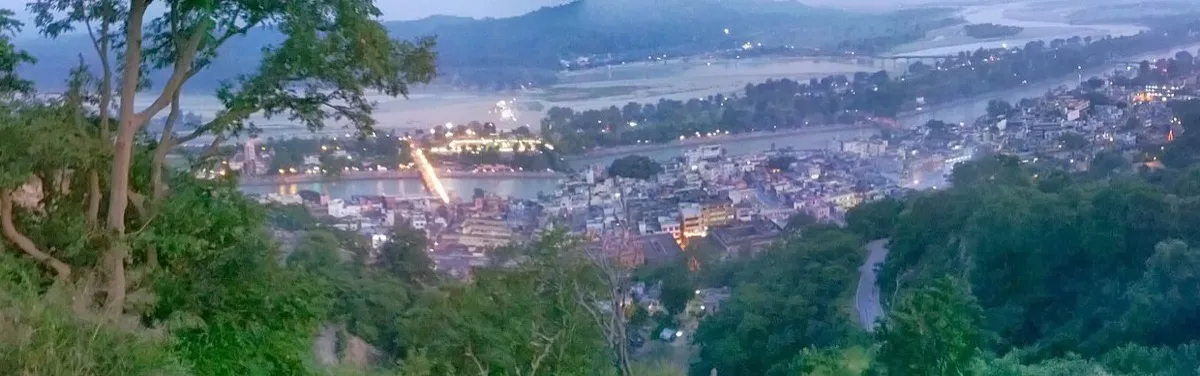
Three goddess temples shape the religious map of Haridwar: Mansa Devi, Chandi Devi and Maya Devi. Together they are called the Siddh Peeths of the city. This post tells the stories as tradition tells them, and says plainly where a story is a legend or a belief. For practical visits, see our guides to Chandi Devi and Mansa Devi.
The three Siddh Peeths of Haridwar
Haridwar has three Siddh Peeths: Mansa Devi, Chandi Devi and Maya Devi (Wikipedia: Maya Devi Temple). A Siddh Peeth is a seat where devotees believe prayers are fulfilled. Two of the three stand on hills, and Maya Devi's temple lies east of Har Ki Pauri.
-
Shri Maa Chandi Devi Temple, Haridwar
Pathari Forest Range · Haridwar, Uttarakhand 249408
-
Maa Mansa Devi Temple, niranjani akhada, Haridwar
Udyog Nagar · X558+528, Mansa Devi Paidal Marg, Haridwar, Uttarakhand 249401
-
Maya Devi Temple, Haridwar
Birla Ghat · Upper Rd, Haridwar, Uttarakhand 249401
-
Ma Chandi Devi Dwar
Manasa Devi Temple Rd · W5VG+V3H, Chandi Devi & Manasa Devi Temple Rd (Only for Padestrian), Haridwar, Uttarakhand 249408
-
Chandi Devi Meditation Point
Shyampur · W5PH+F86, Haridwar, Uttarakhand 249408
-
Mansa devi rope way
Padestrian marg · X557+9V3, Manasa Devi Temple Rd, Haridwar, Uttarakhand 249401
The Panch Tirth
Haridwar's Panch Tirth are Gangadwar (Har Ki Pauri), Kushawart (a ghat in Kankhal), Bilwa Tirtha (the Mansa Devi hill), Neel Parvat (the Chandi Devi hill) and Kankhal itself (Wikipedia: Haridwar). Two of the five are the goddess hills, which shows how central they are to a traditional pilgrimage. Read more about the city's sacred past in our story of Haridwar.
Chandi Devi: the legend from the Skanda Purana
The Skanda Purana tells of two demon kings, Shumbha and Nishumbha. Their generals were Chanda and Munda. According to the legend, the goddess killed Chanda and Munda at this place (Wikipedia).
After the battle, the goddess in her form as Chandika is said to have rested on Neel Parvat. That is why the hill is sacred and why the temple stands at its summit. The legend adds that the two peaks of the hill are called Shumbha and Nishumbha, named after the demon kings she overcame.
The story is retold across Hindu tradition in several versions, with different details, so what you hear locally may differ in small ways. The Haridwar version is tied to one place: the hill you can see from the Ganga.
From legend to temple
Tradition says the main murti was installed by Adi Shankaracharya in the 8th century. The present building dates from 1929, when Suchat Singh, King of Kashmir, built it. A separate legend says Akbar granted land to the temple. For practical details, see the Chandi Devi guide.
Mansa Devi: the legends
Mansa Devi's temple stands atop Bilwa Parvat. Devotees tell more than one story about her (Wikipedia):
- Born of Shiva's mind. One tradition says she emerged from the mind of Shiva.
- Sister of Vasuki. She is described as the sister of the Naga Vasuki.
- The folk tale of the girl Mansa. A folk tale speaks of a girl named Mansa who did sadhana for years to meet Shiva. Through that devotion she gained the powers of a goddess of welfare.
These accounts do not conflict in the minds of devotees. Hindu tradition often holds several stories about one deity side by side. The temple's creator is unknown.
What "Mansa" means
Mansa means wish. That meaning explains the temple's reputation. People come with a request, whether for health, family, work or an exam, and believe the goddess hears it.
The wish-thread practice
Devotees tie a thread to a tree in the temple compound while making a wish. When it is granted, they return and untie the thread. The thread works as a quiet promise to come back, and the untying marks thanks. Offerings are commonly coconuts, fruits, garlands and incense.
Maya Devi: Haridwar's patron deity
Goddess Maya is the patron deity of Haridwar, which is why the city was once called Mayapuri. The temple dates back to the 11th century and stands east of Har Ki Pauri (Wikipedia).
Devotees believe this is where Sati's heart and navel fell, so the temple is sometimes called a Shakti Peeth. The inner shrine has Maya in the centre, Kali to the left and Kamakhya to the right. It is one of three ancient temples still intact in the area, along with the Narayana-shila and the Bhairava temple. For the older names of the city, see the story of Haridwar.
Why goddess worship matters here
Haridwar is known first as a city of the Ganga and of Vishnu and Shiva, so the three goddess temples add another layer. Devotees see them as places of Shakti, the divine feminine power. Chandi Devi stands for the goddess as protector who overcomes evil, Mansa Devi for the goddess who grants wishes, and Maya Devi for the guardian of the city itself. This is how devotees describe them, not an official ranking.
Pilgrims who come for the Ganga often add the goddess temples so that the visit includes all of these aspects of the sacred. It is one reason the hill temples are busy during Navratri, when goddess worship is at its peak. Check the 2027 festival dates if you plan to be in the city then.
How pilgrims commonly visit the three
There is no single fixed order that every family follows. One sensible plan is to take in the three Siddh Peeths over one or two days:
- Start with a morning bath at Har Ki Pauri, and then visit Maya Devi in the old city.
- Go up to Mansa Devi by the footpath or ropeway.
- Cross to Chandi Devi, by trek from Chandi Ghat or by ropeway.
Many families choose the order that fits queues and ropeway timings. If your group has a custom, follow it. The ropeways have a combined ticket and a connecting bus, covered in our ropeway guide.
Reading the stories with care
Temple legends are passed down by word of mouth, by priests and in printed accounts, and details change from place to place. This post follows the versions summarised on the temples' Wikipedia pages and marks each one as a tradition or belief. If a priest or elder tells you a different version, listen to it respectfully. Many pilgrims value the stories less as history and more as a way to understand why a place is sacred. For historical dates and the wider past of the city, see our Kumbh Mela history.
Respectful conduct
- Dress modestly and remove shoes where asked.
- At Chandi Devi, leather, non-vegetarian food and alcohol are banned.
- Do not push in queues. Festival days are crowded for everyone.
- Ask before photographing people or the shrine.
- Treat the wish threads and trees with care. Do not cut or remove threads that others have tied.
- Keep the hill clean. Carry your rubbish down.
Common questions about Chandi Devi and Mansa Devi
What are the three Siddh Peeths of Haridwar?
They are Mansa Devi, Chandi Devi and Maya Devi. Mansa Devi and Chandi Devi are on hills, and Maya Devi's temple is east of Har Ki Pauri.
What does the Skanda Purana say about Chandi Devi?
It tells that Chanda and Munda, generals of the demon kings Shumbha and Nishumbha, were killed here by the goddess. She is said to have rested on Neel Parvat afterwards, and the two peaks are named Shumbha and Nishumbha.
Who is Mansa Devi?
Devotees believe she emerged from the mind of Shiva and is the sister of the Naga Vasuki. A folk tale also speaks of a girl named Mansa who gained the powers of a goddess of welfare through years of sadhana.
Why do people tie threads at Mansa Devi?
The word Mansa means wish. Devotees tie a thread to a tree while making a wish and untie it when the wish is granted.
Is Maya Devi a Shakti Peeth?
Devotees believe Sati's heart and navel fell at the site, so the temple is sometimes called a Shakti Peeth. It is also Haridwar's patron deity and one of the three Siddh Peeths.
Spotted a wrong number or a place we missed? Email hello@uk08.in and we will fix it.